Additional details about special sessions will be posted as they become available.
Monday, November 2, 2026
-
Tutorial: Applications of Magnetic Micro/Nano Robots
— • Coral 3 • TutorialRobotics has long been an area of intense research, but recent years have focused on the development of micro-/nano-sized robots (MNRs) that can be manipulated using magnetic fields. This tutorial will explain the fundamentals of MNRs: how they work, how they are fabricated and how they navigate, followed by their game-changing role in biomedicine, environmental remediation, and food quality.
Chaired by: Cindi Dennis, NIST
-
-
Supported by
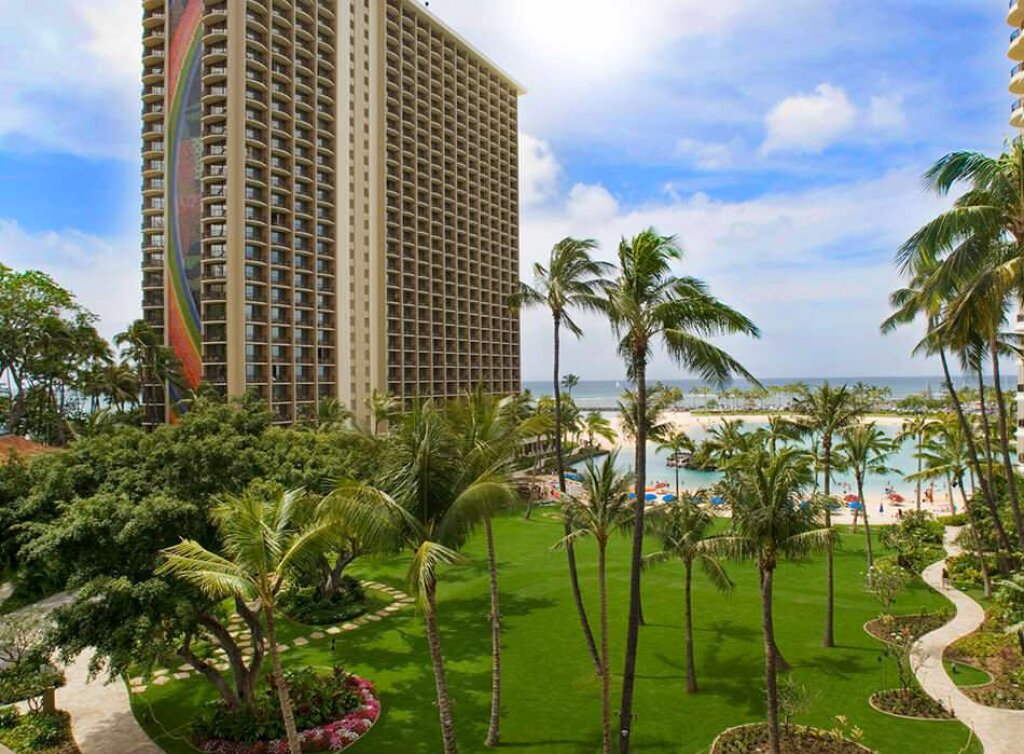
Aloha! Kick off the conference by mixing and mingling island style on Waikiki’s largest private oceanfront grass lawn. Enjoy delicious local cuisine, the sounds of soothing Hawaiian music, and the gorgeous site of the Duke Kahanamoku Lagoon!
Tuesday, November 3, 2026
-
Coffee Break
— • Coral Lounge • SocialEnjoy a cup of coffee or tea while visiting exhibit booths and networking with colleagues.Supported by
-
Special Session: Magnetism in Nuclear Fusion
— • Coral 5 • Special SessionNuclear fusion has recently become a possible source of commercial green energy. This session will explain the fundamentals of nuclear fusion (what it is, how we can do it on earth, and basic reactor design) before discussing the impact of very large magnetic fields on the materials used to build the reactors, namely superconductors and steels.
Chaired by: Cindi Dennis, NIST and Ron Goldfarb, NIST
-
-
Bierstube
— • Coral Lounge • SocialSupported by:
-
Supported by:
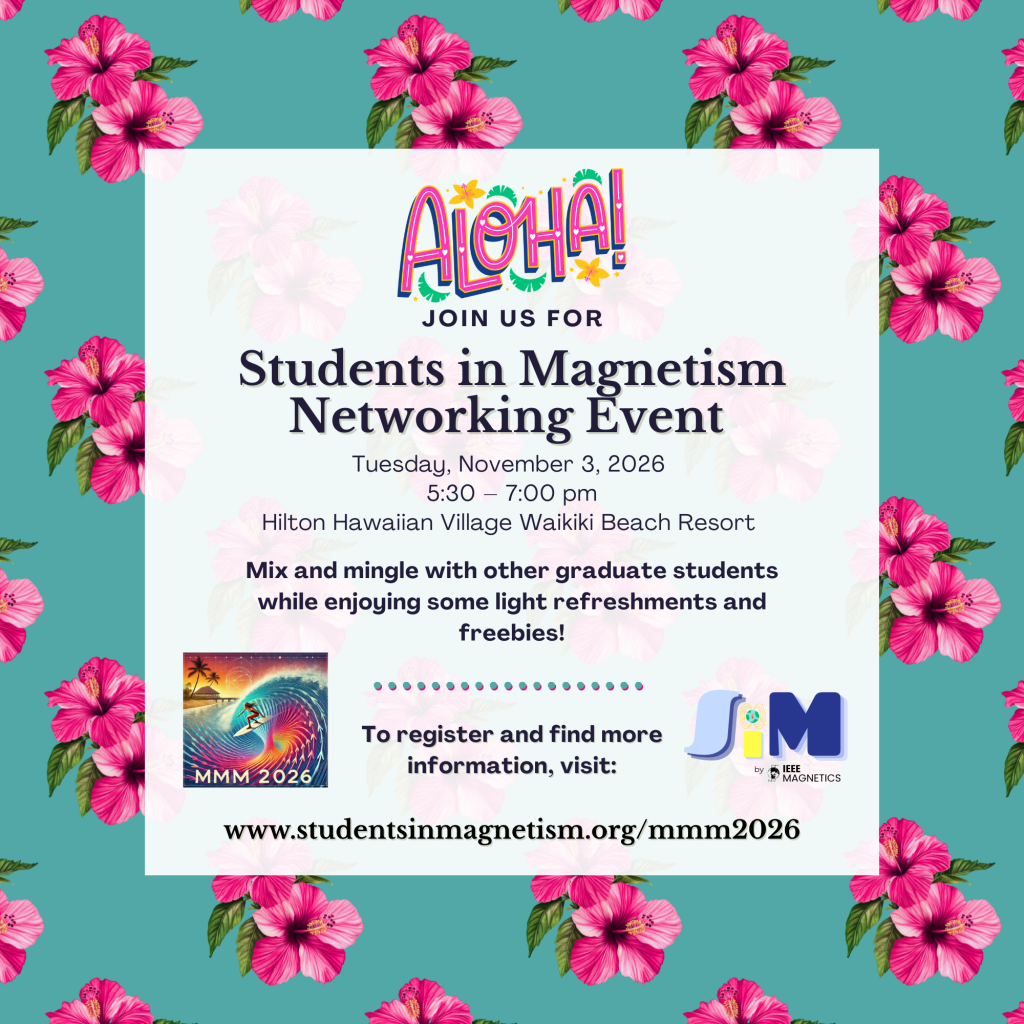
All graduate students are invited to this networking session that will include snacks, giveaways and games!
Please register for this event so we have an accurate count! Click on the event title above for the registration link and more details.
-
Standards Committee Meeting
— • Hibiscus 2 • Special SessionThis IEEE Magnetics Society Standards Committee Meeting is open to all conference attendees. We encourage you to bring your drinks from the bierstube and join the conversation regarding updates on the progress of specific standards or ideas for standards. No pre-registration is required.
Chaired by: Mingzhong Wu, Northeastern University, College of Science
Wednesday, November 4, 2026
-
Coffee Break
— • Coral Lounge • SocialEnjoy a cup of coffee or tea while visiting exhibit booths and networking with colleagues.Supported by
-
Special Session: Narrative is Leadership: Communicating Science Powerfully with the ABT Framework
— • Lehua Suite • Special SessionSupported by:
ABT: The three words that make your science unforgettable.
How much does your audience care about your work?
Your years of research, compressed into a presentation of a few minutes. How do you make it stick? How do you make your audience, specialists and non-specialists alike, care about your work? How can you communicate your scientific ideas more effectively?
The ABT framework is an established technique widely adopted by scientists, communicators, and policymakers worldwide.
Catch the three-part ABT workshop led by professional communicator Matthew David of the ABT Institute, where we learn and apply the ABT framework to communicate science powerfully: in your thesis defense, networking, grant proposals, or simply sharing your work with family.
Note this is a 3-part Workshop!
The first class will be held via Zoom October 26 before the conference.
The second class will be held in-person November 4 at MMM in Honolulu!
The final class will be held via Zoom November 16 after the conference.
To register, select this option on the Conference registration form, or, if you have already registered, you can add it by emailing us at [email protected]. A $15 fee will apply.
Check out more about the ABT Framework here: https://abtnarrative.com/.
Chaired by: Cindi Dennis, NIST
-
Bierstube
— • Coral Lounge • SocialSupported by:
-
Women in Magnetism Networking Event
— • Rainbow Suite & Patio • Networking EventSupported by:
The Women in Magnetism Networking Event brings together women in all career stages to share perspectives, seek advice, and expand their professional networks in a supportive environment. Whether you are attending MMM for the first time, or are a long-time member of the community, this event offers a welcoming platform for all. We invite all conference attendees to participate and contribute to a vibrant conversation that celebrates diversity, collaboration, and the collective strength of women in magnetism. This event will be immediately followed by a panel discussion on key advice for early, mid, and late-career women in magnetism.
Chaired by: Sonal Shreya, Aarhus University -
Women in Magnetism Workshop: LeadHERship in Magnetism: Challenges and Opportunities
— • Rainbow Suite & Patio • WorkshopSupported by:
The Women in Magnetism Workshop will begin with a networking event for women in all stages of their career. This will be immediately followed by an all-women panel discussion focusing on the challenges and opportunities (and lessons learned) at different stages of their career (early-career while setting up a laboratory, mid-career, and senior/leadership roles).
Featured Panelists:
Jean Anne IncorviaJennifer Sears
Beth Stadler
Elizabeth Jefremovas
Tatiana Rappaport
Paola Tiberto
Diana Leitao
Pre-registration is required for the Workshop only.
Chaired by: Sonal Shreya, Aarhus University


Thursday, November 5, 2026
-
Coffee Break
— • Coral Lounge • SocialEnjoy a cup of coffee or tea while visiting exhibit booths and networking with colleagues.Supported by
-
The Magnetic Compass of Life: Special Session
— • Coral 5 • Special SessionSupported by:
This topic bridges magnetism, biology, and quantum physics, offering rich interdisciplinary insights. Two distinguished experts will offer a comprehensive perspective on magnetoreception, from molecular mechanisms to behavioral ecology and quantum biology. $15 fee. Pre-registration is required.
Chaired by: Dr. Hans Josef Hug, University of Basel
-
-
Bierstube
— • Coral Lounge • SocialSupported by:
-
Meet the Distinguished Lecturers
— • Coral Lounge • SocialThis networking opportunity is aimed at early career researchers (post-docs, junior faculty/industrial/government scientists) and is an opportunity to meet some of the past and present IEEE Distinguished Lecturers.
-
A public meeting of the IEEE Intersociety Technology Roadmap on Magnetics for Power Electronics (ITRMP) will be held during MMM 2026 in Honolulu, Hawaii. Both on-site and online participation will be available. Registration for MMM 2026 is not required for those attending only the roadmap meeting. The roadmap will provide an application-oriented review and forecast of magnetics for power electronics. Jointly developed by the IEEE Magnetics Society and IEEE Power Electronics Society, the roadmap will cover magnetic materials, inductors and transformers, operating conditions, circuit and system implementation, industry trends, and relevant international standards. Registration required by October 12. Click on the event title above for more details and the registration link.
Chaired by: Masahiro Yamaguchi, Tohoku UniversityThe meeting is planned in coordination with the Thursday afternoon symposium, “FA: Integrated Magnetics for Power Distribution in Next-Gen Chips and Devices”, and will continue the roadmap activities successfully launched at Intermag 2026 in Manchester. Invited symposium speakers Cian O’Mathuna, Trifon Liakopoulos, and, pending final confirmation, Alex Hanson are expected to join the roadmap discussion.
The discussion will focus on integrated magnetics for power distribution and opportunities for collaboration between the magnetics and power electronics communities. Participants can also exchange views on broader roadmap topics and future activities.
Participation is open to all MMM attendees. Researchers, engineers, students, and industry professionals are welcome. Depending on the roadmap timeline, participants may also be invited to contribute to surveys and future working-group activities. To help us estimate attendance, and identify those interested in future ITRMP updates, please register by October 12, 2026 using the below link:
REGISTER HERE: https://forms.gle/zpiP7s4pFw12zheW6
Friday, November 6, 2026
-
Supported by:
This special session will challenge young professionals (Ph.D. students, post-docs, junior faculty/industrial/government scientists) to present their research in just 2 minutes! Winners will be selected by a panel of judges and awarded cash prizes.
If you would like to submit an abstract for consideration, you must be a current Ph.D. student or within 15 years of your BS/BA degree. Sign up by September 1 to participate as a presenter at this event when you register for the Conference and you will receive abstract submission instructions separately.
Chaired by: Cindi Dennis & Ron Goldfarb, NIST